
“In adult centres, the nerve paths are something fixed, ended, immutable. Everything may die, nothing may be regenerated. It is for the science of the future to change, if possible, this harsh decree.” — Santiago Ramón y Cajal
The Macht Lab, guided by the pioneering insights of Santiago Ramón y Cajal, is inspired by the idea that the brain is not static, but a dynamic organ that is constantly shaped by both internal developmental processes and external influences across the lifespan. This notion is central to our research, as we seek to understand how early-life experiences—such as adolescent alcohol exposure—can permanently alter the structure and function of the brain across, particularly in regions critical for learning and memory-related behaviors like the hippocampus. By uncovering the mechanisms behind these neurotransformations, our research aims to provide new insights into how the molecular landscape contributes to cognitive impairments across the lifespan.
Key Research Themes
1.Environmental Impacts on Brain Development
We study how adolescent physiological, psychological, and pharmacological stressors—including alcohol exposure—affect brain development, particularly in the hippocampus. The hippocampus is integral to both spatial learning and memory consolidation, and it is one of only two known regions in the adult mammalian brain that continues to give birth to and functionally integrate newborn neurons throughout the lifespan. By examining the long-term consequences of these early-life challenges on maturing hippocampal circuitry, we seek to uncover the mechanisms by which the brain adapts (or fails to adapt) to environmental exposures.
2.Neuronal and Immune Interactions in Brain Development
Early-life immune signaling plays a crucial role in the development and maturation of the brain. Our lab examines how disruptions in neuroimmune signaling pathways—such as the release of high mobility group box 1 (HMGB1) and other inflammatory mediators—can impair the functional profile of hippocampal newborn neurons, leading to deficits in synaptic plasticity and long-term cognitive dysfunction. We aim to identify how developmental changes in these cellular interactions reshape neural circuits and influence memory and learning behaviors across the lifespan.
3. Cholinergic Regulation of the Hippocampal Neurogenic Niche
The central cholinergic system is critical for healthy cognitive function, in part due to its key role as a negative regulator of innate immune signaling. In our lab, we explore how disruptions in this pathway can alter the signaling dynamics in the hippocampal neurogenic niche, potentially leading to deficits in hippocampal neurogenesis and cognitive function. We aim to uncover novel mechanisms that could enhance neurogenic processes in the hippocampus with potential therapeutic implications for neurodevelopmental and neurodegenerative disorders.
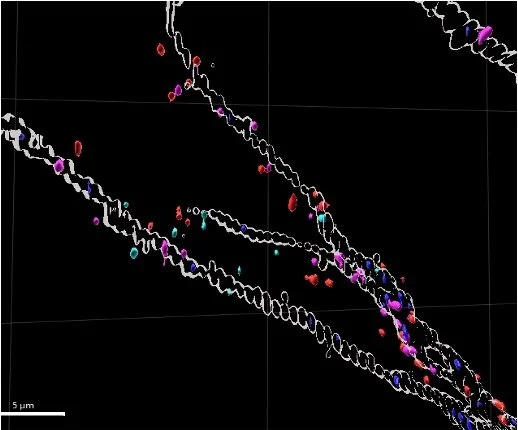
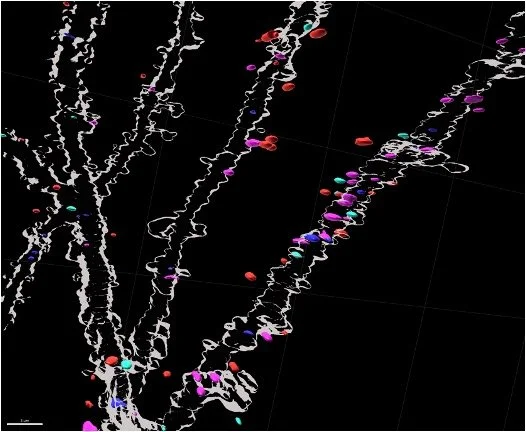
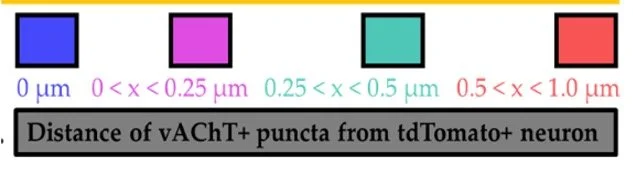
Surviving adolescent granule neurons exhibit a high degree of colocalization with cholinergic terminals which attenuates with increasing distance from dendritic branches. Imaris rendering of vAChT puncta with increasing disance from adolescent immature (tdTomato+) neurons. Puncta were separated into separate categories. Complete colocalization (0 µm from tdTomato+ labeling, blue), and then less than 0.25 µm distance (fuscia), and 0.25 to 0.5 µm distance (turquoise). Puncta between 0.5 and 1 µm from neurons are identified here in red but were excluded from analysis.
Genetic Mouse Models (DCXcreERT2/tdTomato Transgenic Mice)
Our lab uses a Doublecortin-CreERT2 transgenic mouse line, originally developed by Dr. Zhi-Qi Xiong (Institute of Neuroscience, Shanghai, China) and generously provided by Dr. Eric Schnell (OHSU). This genetic model allows us to fate-map newly generated neurons in the hippocampus during specific developmental windows and track them across the lifespan. This model allows us to ask exciting questions like, how does alcohol exposure during adolescence reshape the developing neurocircuitry in the hippocampus?
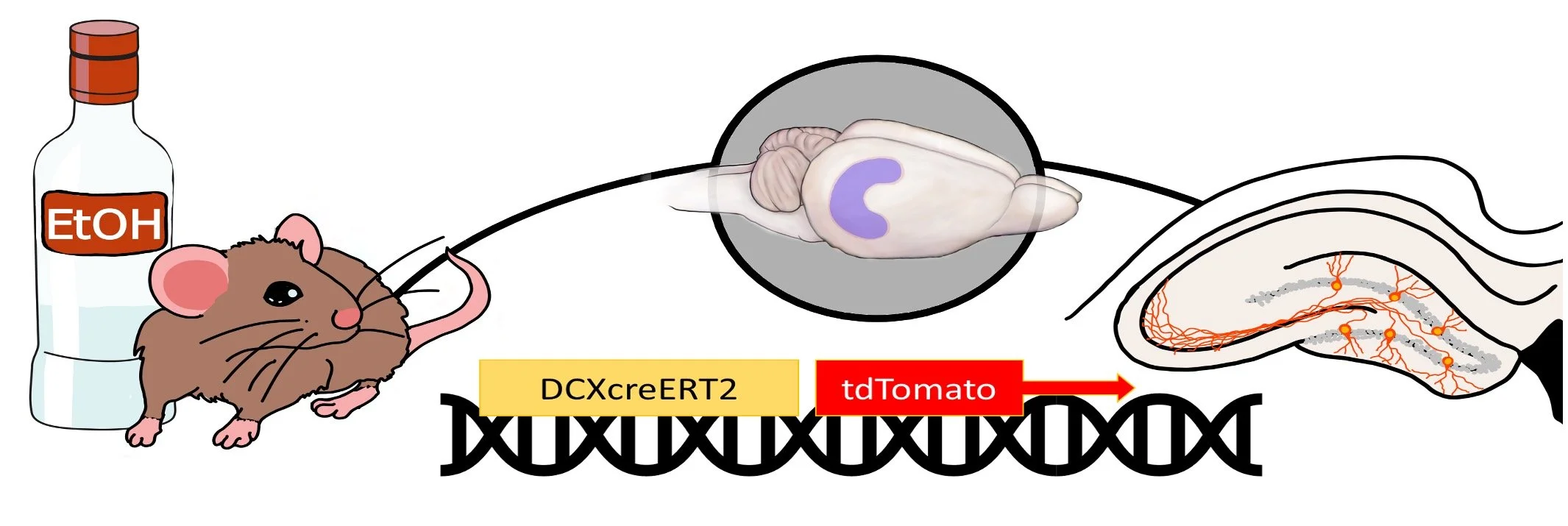
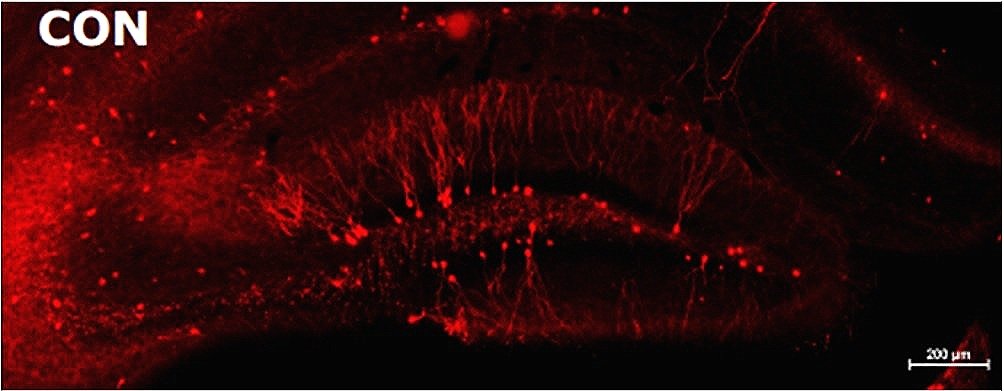
To characterize the mature phenotype of adolescent immature neurons, DCXcreERT2/tdTomato transgenic mice are used in our experiments to fate-map adolescent immature neurons.
Electrophysiology
We use electrophysiology to record and analyze the electrical activity of granule neurons in the hippocampus. This allows us to study lasting changes to the physiological properties of newborn granule neurons in response to different behavioral, physiological, and/or pharmacological exposures. This allows us to ask questions like, how does alcohol exposure across adolescence impact the firing capacity of developing neurons in adulthood?
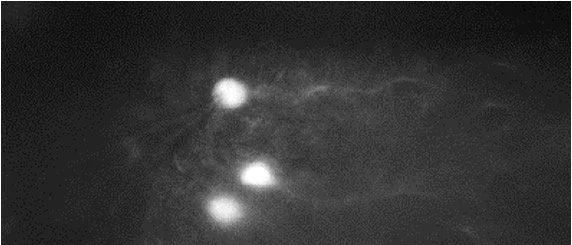
Example photmicrograph of tdTomato+ neuron with recording electrode using electrophysiology(EPHYS).
Immunohistochemistry (IHC) and Advanced Imaging
Immunohistochemistry (IHC) allows us to visualize specific proteins and cellular markers in brain tissue, providing detailed information about changing molecular cascades in neuronal development, immune cell activation, and brain circuitry. Using confocal and fluorescent microscopy, we can capture high-resolution images of brain tissue and monitor how immune disruptions alter neuronal morphology and function in real time.
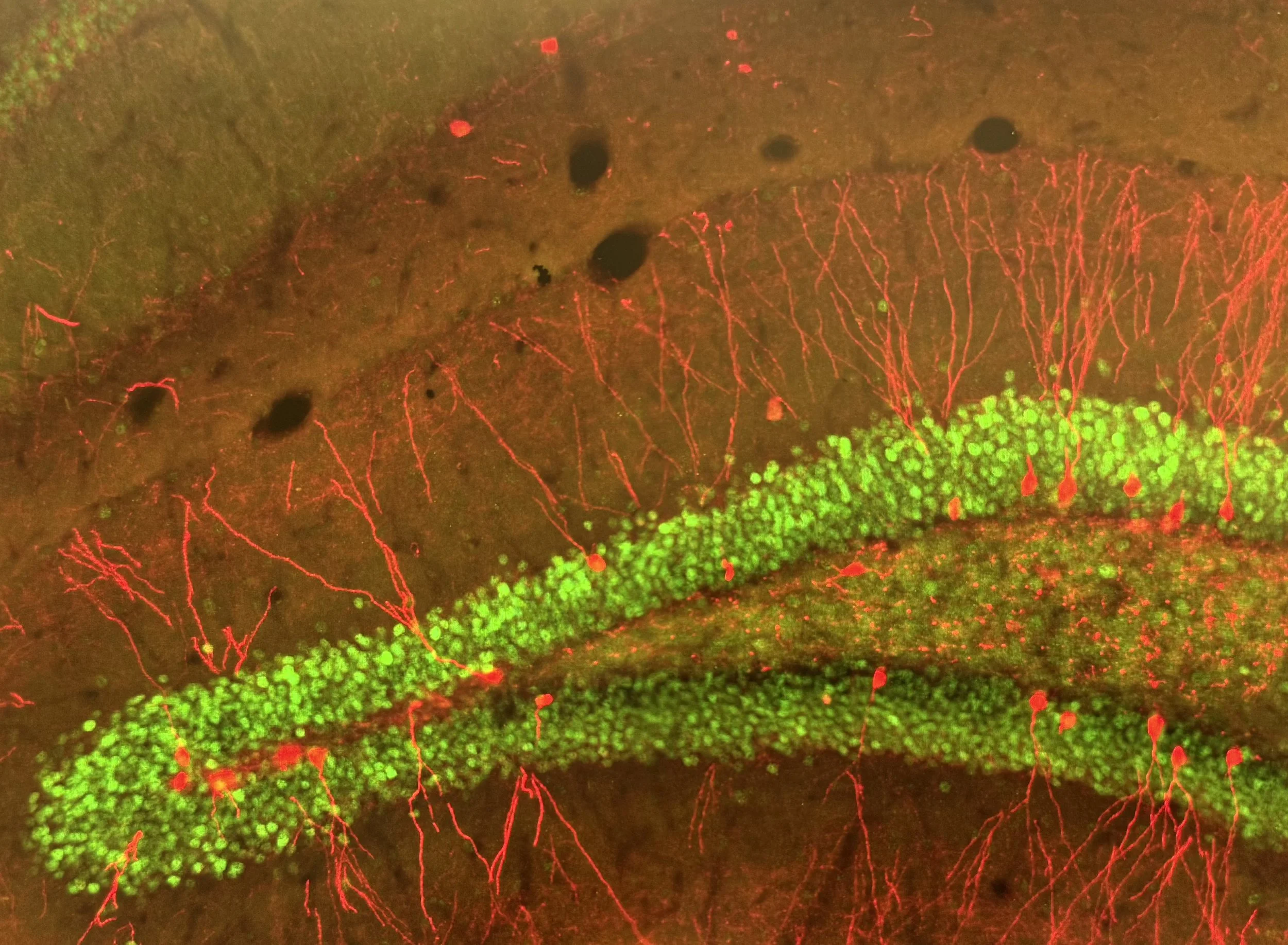
Immunohistochemical (IHC) fluorescent staining showing the expression of FosB (green) in neurons labeled with tdTomato (red). The dual labeling highlights FosB activation in tdTomato-positive cells(red) , providing insight into neuronal activity patterns. Magnification: 20X
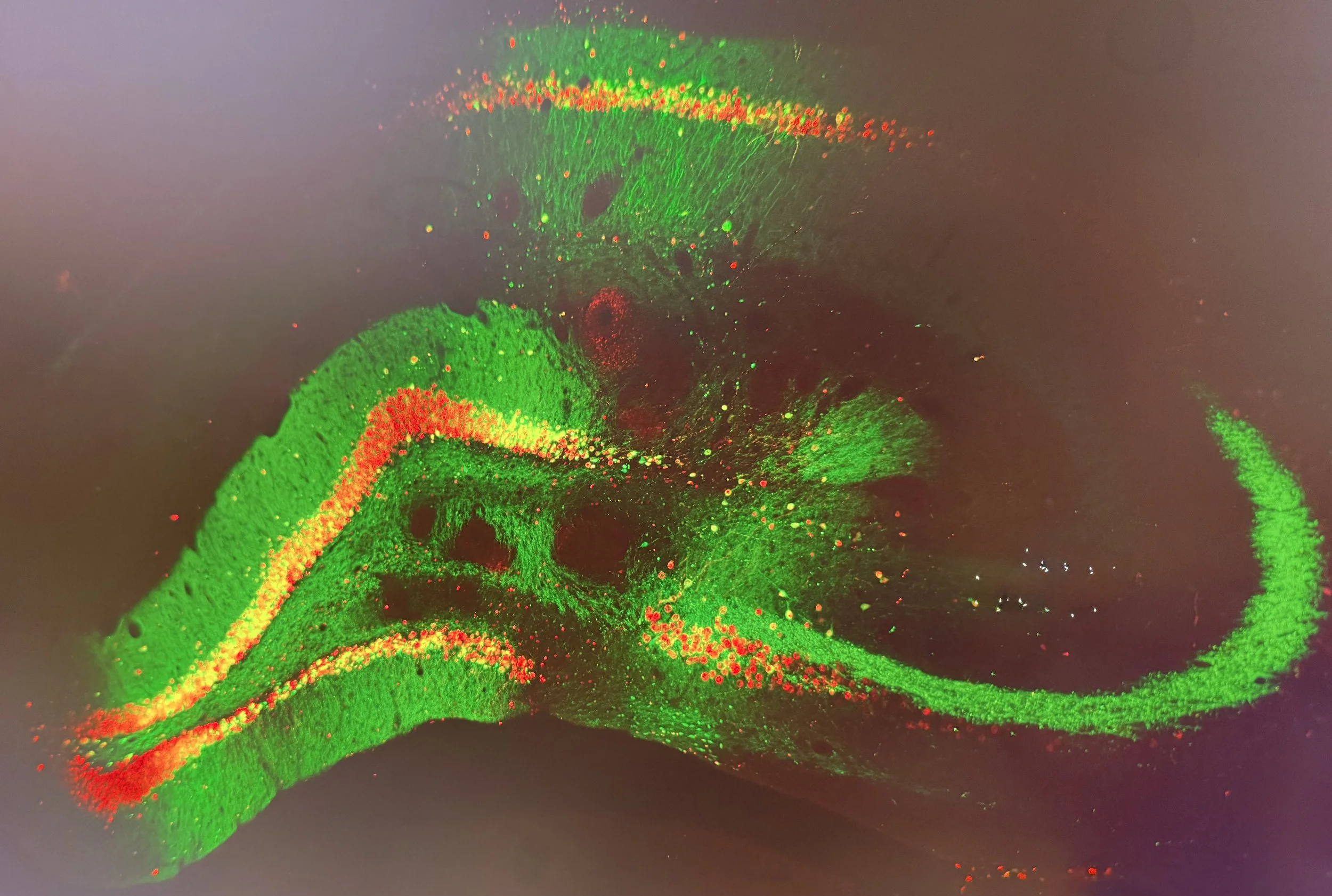
Representative immunofluorescence image showing HMGB1 expression (red; Alexa Fluor 594) and viral transduction (green; 488 nm) in the hippocampus of a study utilizing control and ethanol-exposed rats. Rats were injected with a FLAG-tagged HMGB1 virus to assess viral expression and HMGB1 upregulation.
Behavioral Assays
We firmly believe that any changes in molecular or physiological cascades are the most relevant when examining the context of cognitive-behavioral function. To examine the consequences of adverse events like adolescent alcohol exposure, we employ a multitude of behavioral assays. These include the Morris Water Maze, Novel Object Recognition, and Social Dominance. These tests assess spatial and non-spatial learning and memory-related domains, helping us to identify how disruptions in hippocampal function manifest as cognitive impairments.
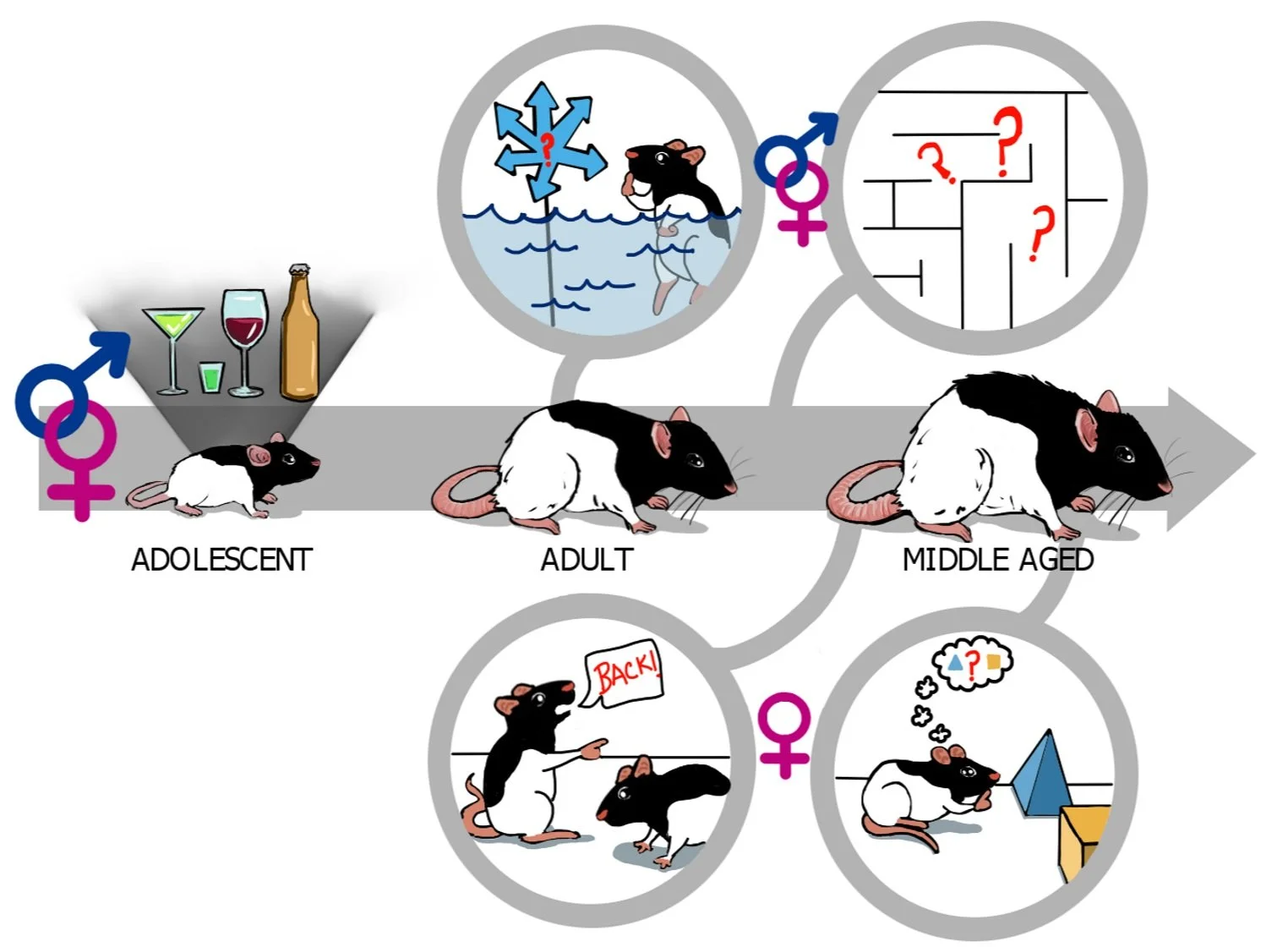
Behavioral development across life stages: Adolescence, adulthood, and middle age in the mouse model.